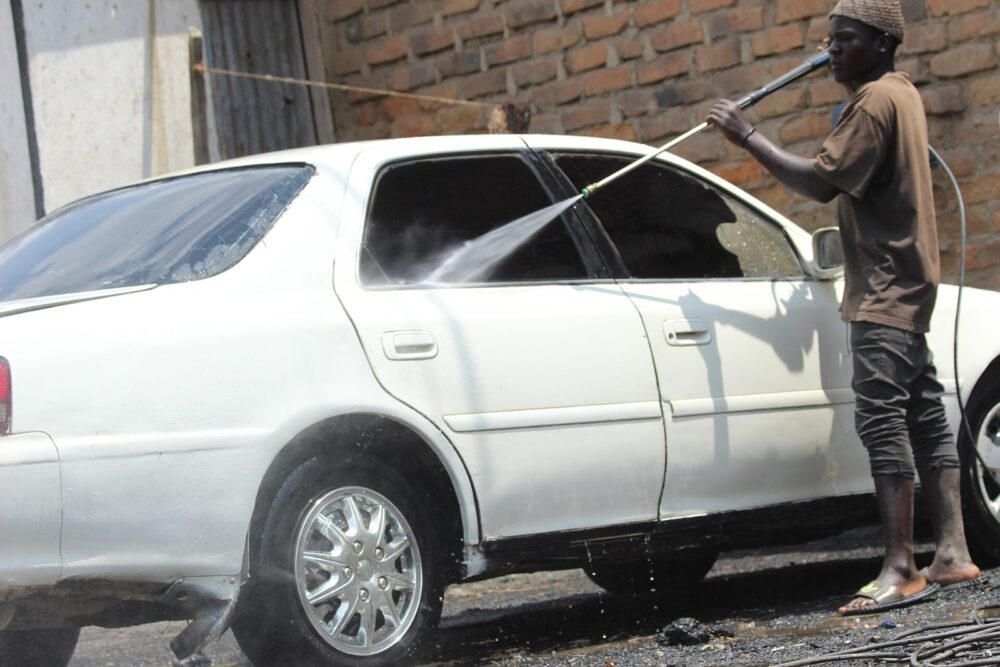
A manual car wash is a wash done by hand, with mitts, buckets and towels, rather than by brushes or a touchless machine. It is slower, but it lets you control pressure, products and technique panel by panel, which is why owners of dark, coated or classic cars often prefer it. The quality depends almost entirely on the method, so a careless hand wash can scratch more than a good machine.
In this guide
Hand wash vs machine wash
| Time | 30 to 90 minutes | 5 to 10 minutes | 5 to 12 minutes |
|---|---|---|---|
| Control over pressure | Full | None | None |
| Reaches door jambs, badges, grilles | Yes | Rarely | Partly |
| Swirl risk | Low with good technique, high with bad | Low to moderate | Low |
| Removes bonded road film | Yes | Yes | Partly |
You can compare more formats in the site’s car wash methods comparison.
What you need
- Two buckets, ideally with grit guards at the bottom
- A pH-neutral car shampoo (not dish soap, which strips protection)
- Two or more plush wash mitts: one for upper panels, one for lower panels
- A separate wheel bucket, wheel brush and tyre brush
- A hose with a trigger nozzle or a pressure washer with a fan tip
- Large, soft microfibre drying towels
- Optional: foam cannon or pump sprayer for pre-wash foam
The two-bucket method, step by step
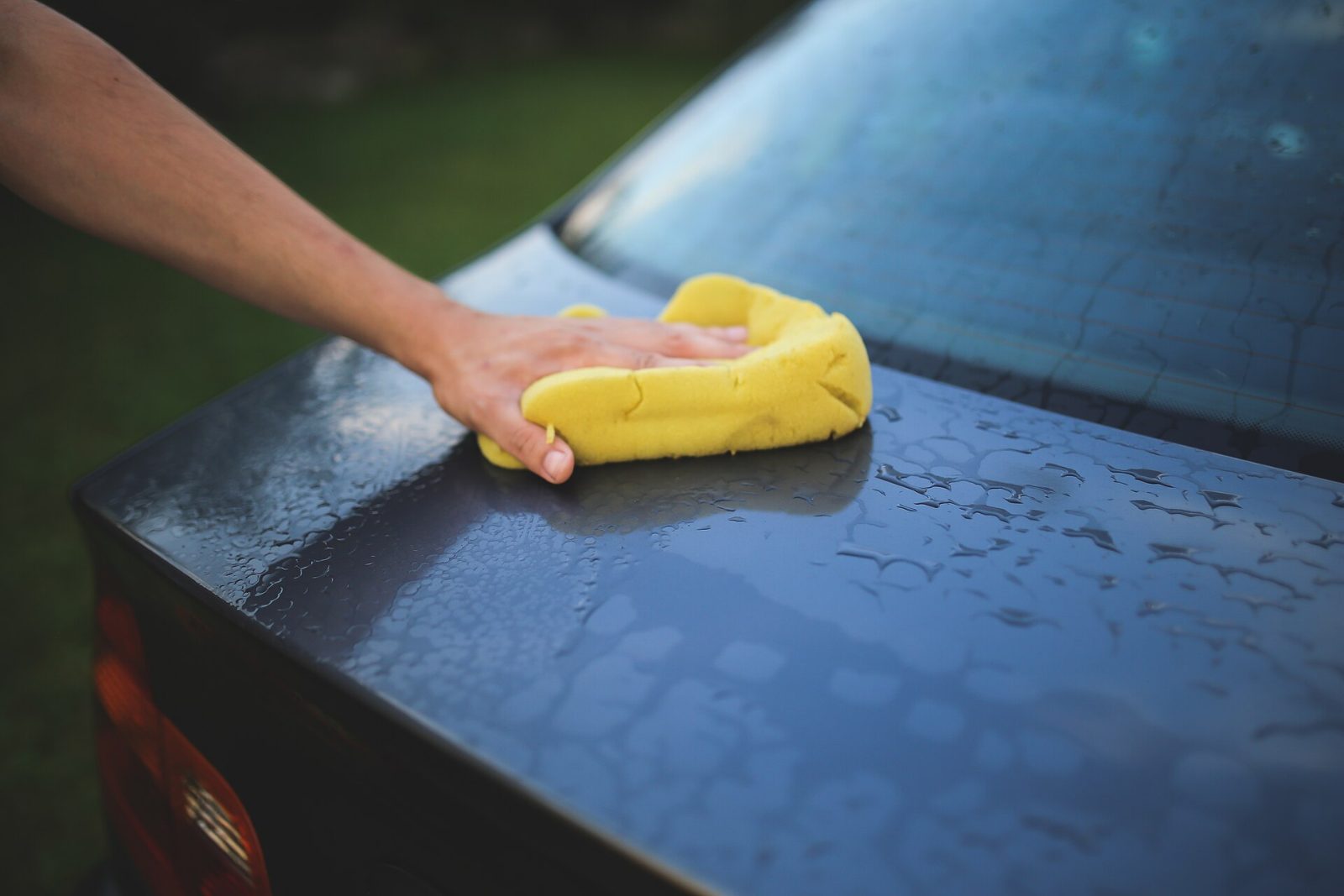
This is the core of a safe manual wash. One bucket holds shampoo solution; the other holds plain water for rinsing the mitt. Dirt goes into the rinse bucket instead of back onto the paint.
- Choose the time and place. Work in shade, early morning or evening. In UAE summer, panels in direct sun can get hot enough to dry shampoo in seconds.
- Wheels first. They are the dirtiest part. Clean them with dedicated tools so brake dust never reaches your paint mitt.
- Rinse the whole car. Start at the roof and work down to flush off loose sand and dust.
- Pre-wash foam (optional). Foam lets dirt soften and slide off before you touch the paint. Rinse it off before it dries.
- Wash top to bottom. Roof, glass, bonnet and boot first; then upper sides; lower sides and bumpers last.
- Straight lines, light pressure. Move the mitt in straight overlapping passes rather than circles. Let the mitt glide.
- Rinse the mitt often. After each panel, dunk and agitate it in the rinse bucket, then reload with shampoo.
- Swap mitts for the lower third. Sills and lower doors hold the most grit.
- Final rinse. A gentle flowing rinse without the nozzle can help water sheet off.
- Dry immediately. Lay a large towel flat and pat or drag gently. Use a second towel for door jambs.
Avoiding water spots in heat
- Wash and dry one section at a time on very hot days.
- Keep the car wet until you are ready to dry each panel.
- Consider a drying aid or quick detailer as lubricant while drying.
- Filtered or deionised water reduces mineral spots if your supply is hard.
Common hand-wash mistakes
Most swirl marks on hand-washed cars come from the towel, not the mitt. Dry with care.
- Using one bucket and a sponge, which traps grit against the paint
- Washing in direct midday sun
- Dropping a mitt or towel on the ground and continuing to use it
- Using dish soap or household cleaners
- Pressing hard on stubborn spots instead of using a dedicated product
- Drying with an old bath towel or chamois that has picked up grit
Spots that need their own treatment
Bird droppings, tree sap, bug splatter and tar should be softened with a suitable product, not scrubbed. In UAE heat, bird droppings can etch clear coat quickly, so remove them as soon as you can.
How often to hand wash
There is no fixed rule. In a dusty environment, many owners hand wash every week or two and rely on careful dusting or rinseless washes between. A car in covered parking can go longer. What matters is removing contaminants before they bond or etch.
Hand wash at a station vs at home
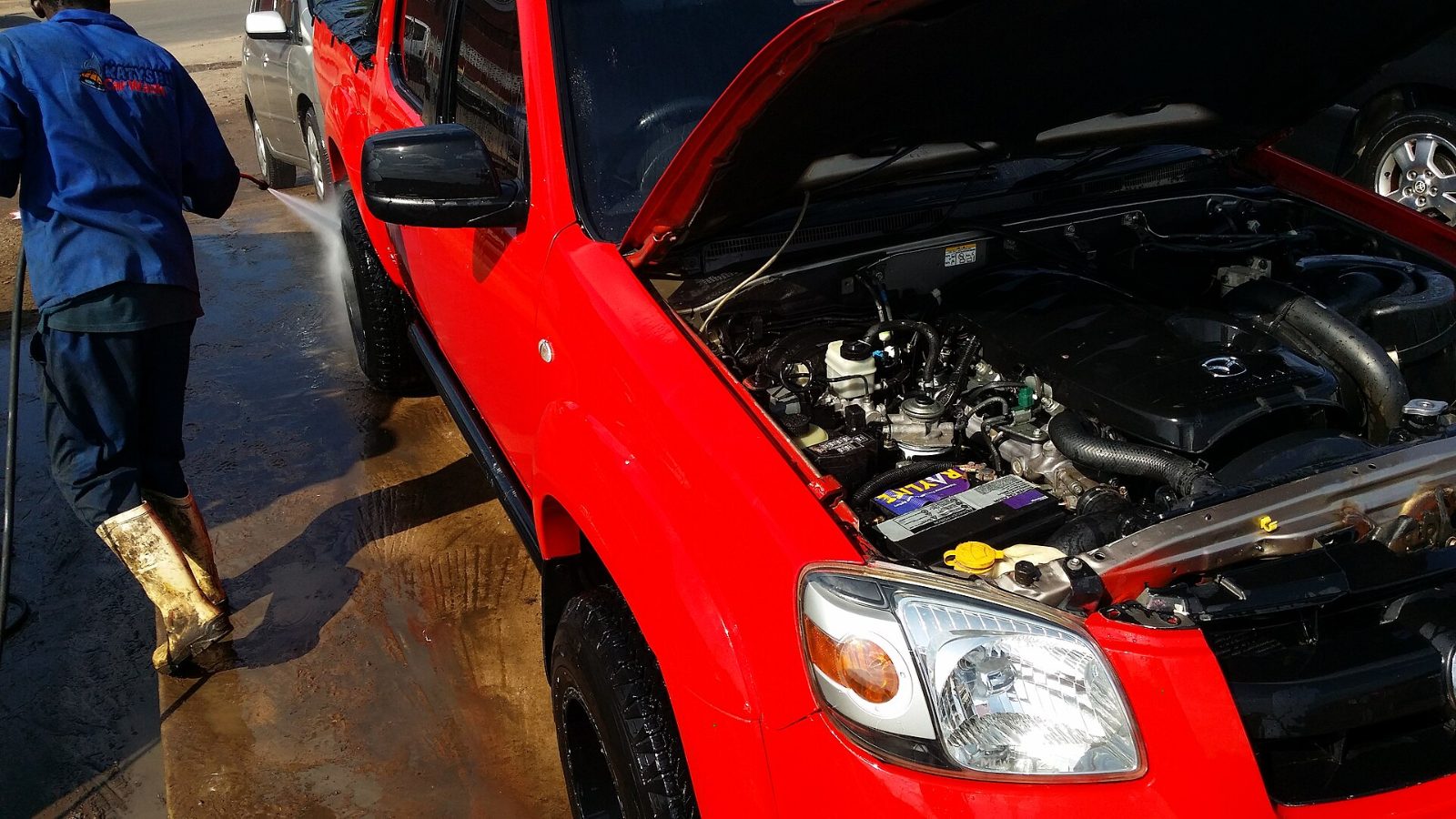
Many UAE petrol stations and wash centres offer manual washes by staff. Quality varies: some use clean mitts and two buckets, others share sponges across cars. If you use a station, watch a car being washed before you commit. At home, check community rules and municipality regulations on water use and run-off. Rinseless methods are often allowed where hose washing is not.
After the wash: quick protection
A wash is the best time to add a quick layer of protection. Spray sealants applied to clean, dry paint can add gloss and make the next wash easier. For a full detailing plan including clay, polish and interior, follow the detailing checklist.
Caring for your wash kit
Your mitts and towels decide how safe the next wash will be. After each session, rinse mitts thoroughly and wash them with your microfibre towels using a mild detergent and no fabric softener, which clogs the fibres. Dry them in shade or on low heat, then store them in a closed box so dust cannot settle on them. Replace mitts when the pile becomes matted or flat, and retire any towel that has been dropped on sand to wheel or engine duty. Rinse buckets and grit guards too, since a layer of old sediment at the bottom defeats their purpose.
Frequently asked questions
Is a manual car wash better than an automatic one?
It can be gentler and more thorough when done properly. Done badly, it can cause as many swirls as a poorly maintained machine.
Can I use a sponge?
Sponges trap grit on their flat surface. A deep-pile microfibre or wool mitt pulls dirt away from the paint more effectively.
How long does a proper hand wash take?
Around 30 to 60 minutes for a careful exterior wash, more if you include wheels, door jambs and drying details.
Do I need a pressure washer?
No, but it makes rinsing faster and uses less water than an open hose. Keep a safe distance and use a fan nozzle.
Sources: Dubai Municipality, International Carwash Association, US EPA
Cover photo: KelvinJM, CC BY-SA 4.0. Last reviewed: 2026-11-25.