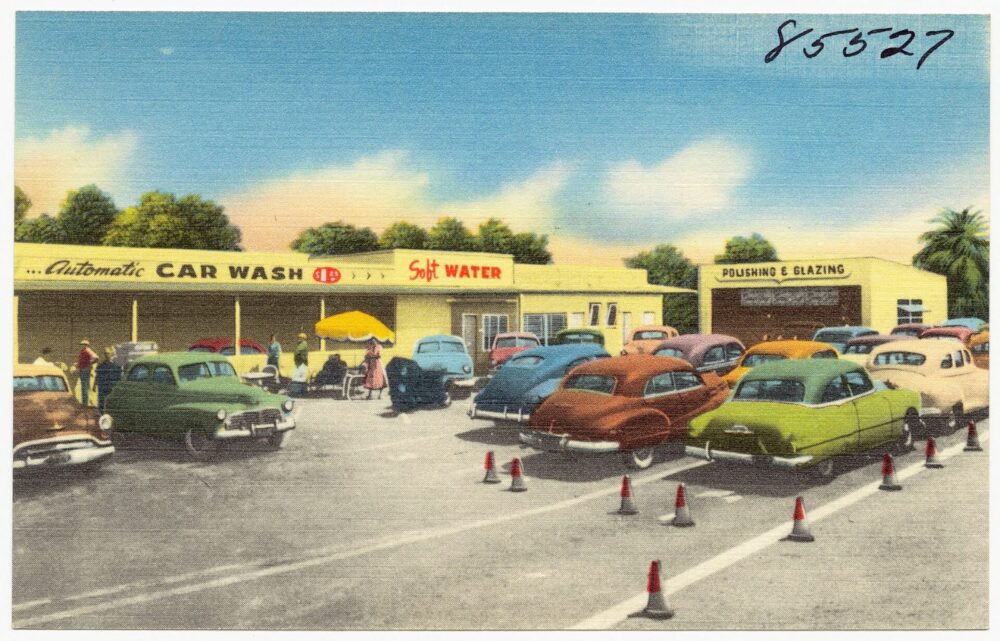
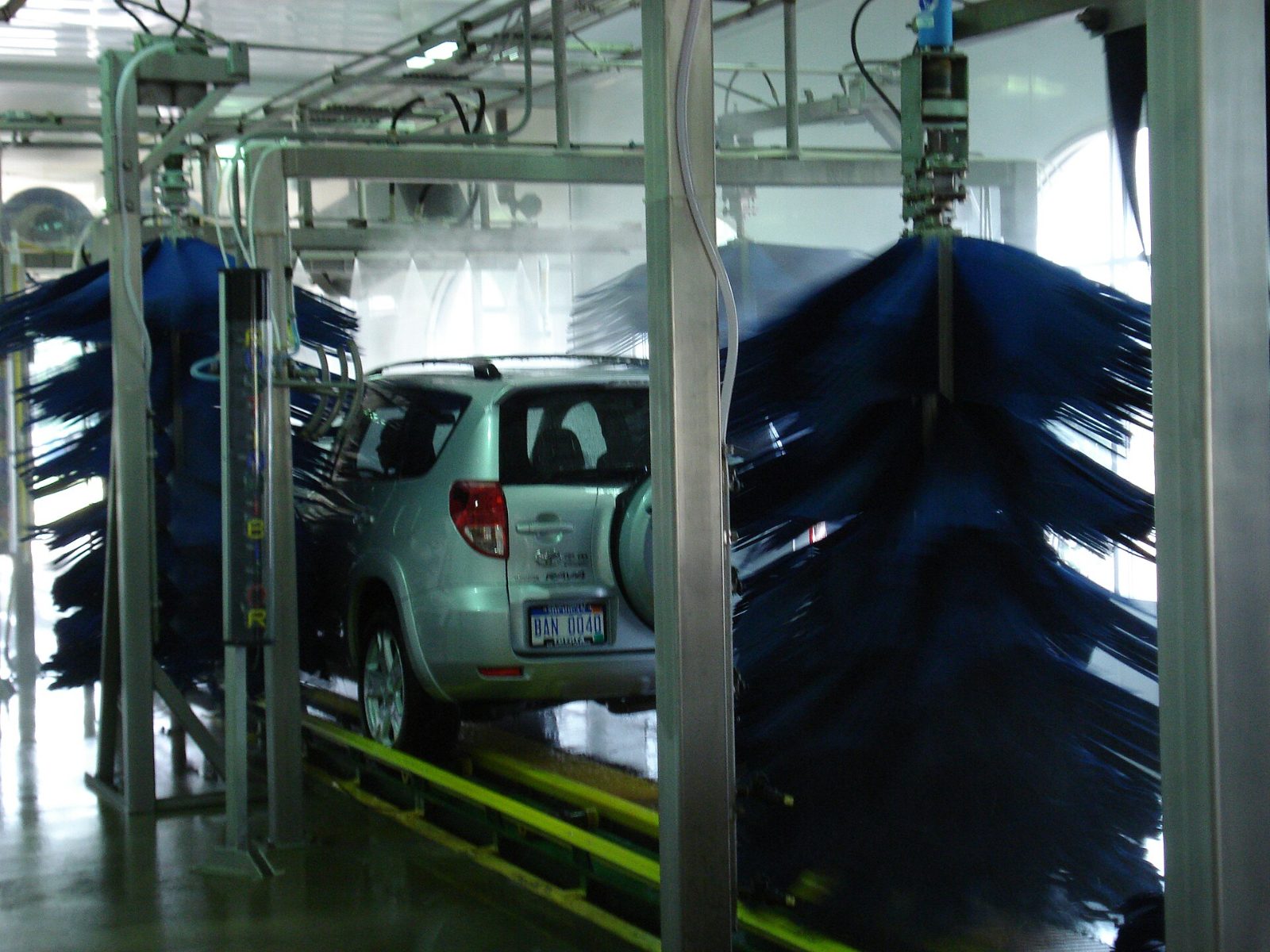
An automatic car wash cleans your car with machines instead of hands, either in a single bay where a gantry moves over a parked car or in a tunnel where the car is pulled along a conveyor. Touchless versions use chemicals and high-pressure water only, while soft-touch versions add foam or cloth brushes. They are fast and convenient, but the risk of fine scratches, missed spots and damage to accessories depends on the type of machine and how well it is maintained.
In this guide
The main types of automatic car wash
| Type | How it works | Pros | Cons |
|---|---|---|---|
| In-bay automatic (rollover) | You park, a gantry moves back and forth over the car | Common at petrol stations, quick | Limited pre-wash, brushes vary in quality |
| Tunnel wash | Car moves on a conveyor through a series of stations | Very fast, many add-ons | Conveyor rails can catch wide wheels or low cars |
| Touchless | High-pressure water and stronger chemicals, no brushes | No brush contact with paint | May leave a thin traffic film, stronger chemicals |
| Soft-touch or friction | Foam or cloth brushes contact the paint | Better at removing stuck dirt | Risk of swirl marks if brushes are dirty or worn |
Many UAE petrol stations and malls have in-bay or tunnel systems, and hand-wash stations remain popular alongside them.
Are automatic car washes bad for paint?
The honest answer is that it depends. Modern foam and cloth materials are far gentler than the old nylon bristle brushes, and a well-run wash with strong pre-soak and plenty of water can be reasonably safe. Problems usually come from:
- Brushes that collect grit from very dirty cars ahead of you
- Weak pre-wash, so sand is dragged across the paint
- Harsh chemicals in touchless washes used too often on coated or waxed cars
- Blowers that leave water spots in the sun
On dark-coloured cars, fine swirl marks from repeated friction washes are easier to see. On cars with fresh paint correction, ceramic coatings or wraps, many owners prefer hand or touchless washing.
The cleaner the car going in, the safer an automatic wash tends to be.
What to check before driving in
Remove or secure these items
- Roof bars, bike racks and aftermarket antennas
- Loose trim, damaged mirrors or bumpers held with tape
- Rear wiper on some cars, which can be caught by brushes
- Large off-road tyres or wide wheels that may not fit tunnel guide rails
- Folding mirrors: fold them in if the wash instructions suggest it
Also check the height and width limits posted at the entrance, especially for lifted 4x4s and pickups with accessories.
Getting the best result
- Pre-rinse heavy sand at home or at a jet-wash bay if the car has been off-road. Automatic brushes are not designed for thick desert dust.
- Choose the right programme. Basic programmes often skip underbody wash and wheel cleaning. After a desert trip, an underbody rinse is worth paying for.
- Follow instructions precisely. Neutral gear, hands off the wheel and foot off the brake in a tunnel; engine off in some in-bay systems.
- Dry off spots afterwards. Use a clean microfibre towel on the windscreen, mirrors and dark panels, especially on hot days.
- Check door shuts and mirror housings. These often trap dirty water.
Touchless for maintenance, hand wash for detail
A practical pattern for many owners is to use a touchless wash for quick weekly maintenance and do a careful hand wash every few weeks. Our wash method comparison shows how the options stack up.
Wax and coating add-ons
Many automatic washes offer spray wax, sealant or ceramic-type products as upgrades. These can add short-term gloss and water beading, but they are not a substitute for properly applied protection. If your car has a professional ceramic coating, ask your installer whether these add-ons are compatible, and avoid strongly alkaline pre-washes.
| Add-on | Typical benefit | Lifespan |
|---|---|---|
| Spray wax | Gloss, water beading | Short |
| Spray sealant | Slightly longer protection | Short to medium |
| Underbody wash | Removes sand and salt from chassis | Immediate benefit |
| Tyre shine | Cosmetic | Short |
Water use and the environment
Commercial washes in many places are designed to capture and recycle a large share of their water, which can make them more efficient than washing with an open hose at home. In the UAE, where water is largely produced by desalination, choosing a wash station with water recycling, or a low-water method at home, is a sensible choice.
When to avoid an automatic wash
- Right after paint correction or a new coating, until it has fully cured
- On cars with vinyl wraps or PPF edges that are lifting
- On classic cars or cars with fragile trim
- On heavily modified vehicles with non-standard dimensions
Our full detail checklist covers gentler options for these cars.
Frequently asked questions
Is a touchless car wash safer than a brush wash?
It avoids brush contact, which reduces the risk of swirl marks, but uses stronger chemicals and may not remove all traffic film. Both can be safe when well maintained.
Can an automatic car wash damage my car?
It can, mainly through loose parts, accessories, worn brushes or incorrect use. Following instructions and removing accessories reduces the risk.
How often can I use an automatic car wash?
Weekly use is common. If you notice swirl marks building up, switch to touchless or hand washing more often.
Do automatic washes clean the underbody?
Only if the programme includes it. Choose an underbody option after desert or beach trips.
Sources: International Carwash Association, Dubai Electricity and Water Authority, Dubai Municipality
Last reviewed: 2026-11-25.