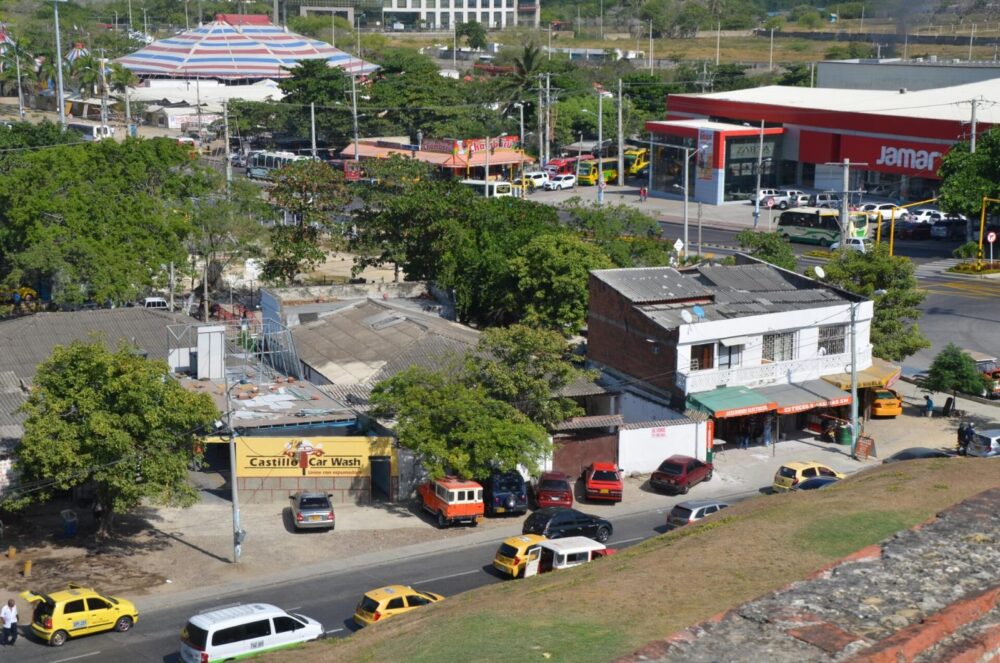
A tunnel car wash is a conveyor system that pulls a car through a long building fitted with a sequence of fixed wash stations, from pre-soak arches to brushes, rinse and dryers. It is the highest-throughput type of automatic wash, built to clean many cars an hour, and the quality you get depends mostly on how well the operator maintains and configures each station.
In this guide
How a tunnel differs from other automatic washes
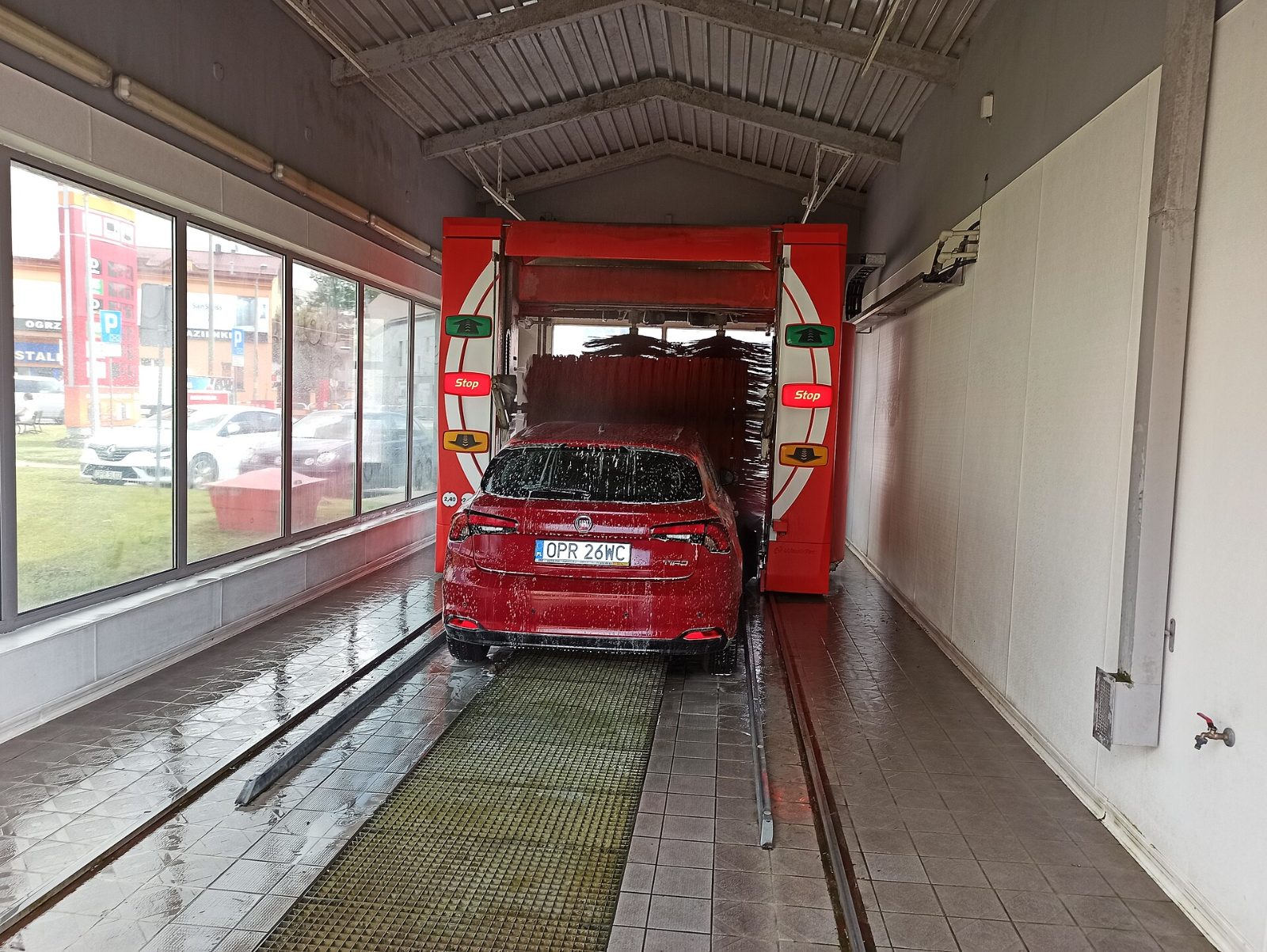
In an in-bay or rollover wash, the car stays still and the machine moves. In a tunnel, the car moves and the equipment stays still. A conveyor, usually gripping one front wheel or carrying the car on a belt, pulls it along at a steady pace past each station.
| What moves | The car, on a conveyor | A gantry over the car | A rotating arm |
|---|---|---|---|
| Throughput | High | Moderate | Moderate |
| Contact | Usually foam or cloth | Brushes or touchless | Touchless |
| Length of building | Long | Short bay | Short bay |
| Typical extras | Many stations, tyre shine, wax arches | Fewer options | Spot-free rinse, wax |
For a quick view of all wash formats, see our car wash methods comparison.
The stations, in order
Exact layouts vary, but most tunnels follow a logic like this:
- Entry and guide rails: you line up the wheel with the conveyor track.
- Pre-soak arch: chemicals loosen dirt and bugs.
- Wheel and tyre brushes: low-mounted brushes for rims and sidewalls.
- Wraparound brushes: vertical foam or cloth rollers clean the front, sides and rear.
- Top brush or mitter curtain: cleans the roof, bonnet and boot lid.
- Rinse arches: high-pressure and then low-pressure rinse.
- Protectant arch: spray wax, sealant or drying agent.
- Final rinse: often spot-free water.
- Blowers: high-volume air knives that push water off.
Some tunnels add a hand prep station at the entrance, where staff spray and brush heavily soiled areas before the car enters. That step makes a real difference for cars covered in desert dust.
Driving through: what staff expect from you
Typical driver instructions
- Line up the front wheel with the guide rail and follow hand signals.
- Shift to neutral, take your foot off the brake and keep hands off the steering wheel.
- Leave the engine running or switch it off according to site instructions; follow what you are told.
- Do not brake or steer while on the conveyor unless staff tell you to.
Braking on the conveyor is one of the main causes of tunnel collisions, because the car behind keeps moving. Modern sites have sensors and stop buttons, but the safest approach is to follow the signage exactly.
Is a tunnel wash bad for paint?
The honest answer: it depends on the tunnel. Older tunnels with nylon bristles had a poor reputation for swirl marks. Most modern tunnels use closed-cell foam or soft cloth that does not hold dirt the way bristles did, and they flood the surface with water and lubricating soap. Risk factors that remain:
- Poorly maintained or dirty brush material
- Short pre-soak with heavy sand on the car
- Loose trim, damaged clear coat or aftermarket parts that brushes can catch
- Matte finishes, which can get shiny patches from friction and wax
A clean, well-run tunnel can be gentler than a rushed hand wash with a gritty sponge. A neglected one cannot.
How to judge a tunnel before you use it
- Look at the brushes: clean, light-coloured foam is a good sign.
- Watch a car exit: is it dripping clean, or streaky and still dusty on the lower panels?
- Check the signage for what the site does not accept, such as roof boxes or wide tyres.
- Read recent reviews for mentions of damaged mirrors or scratches.
Water and chemicals
Many tunnels reclaim and treat part of their water for early stages and use fresh or treated water for final rinses. That can mean less water per car than washing with an open hose at home, though it varies widely by operator. Chemical choice also varies; most professional sites use products formulated for their equipment and dosed automatically.
In the UAE, hard water and heat are the main enemies of a spotless finish. A spot-free final rinse, combined with strong blowers, helps prevent mineral marks forming as the car dries in the sun.
After the tunnel
Even good tunnels miss areas: door jambs, the inside of the fuel flap, the area under the rear spoiler and sometimes the lower rear valance. A two-minute wipe with a clean microfibre towel takes care of most of it. Every few weeks, pair tunnel washes with a careful hand wash and a protection top-up using the steps in the detailing checklist.
If you spot new damage, report it before leaving the site. Operators usually need to see it on the premises to consider a claim, and many display limits on liability for specific items.
Frequently asked questions
Can I use a tunnel wash with a roof rack?
Many tunnels do not accept roof boxes, bike racks or tall aftermarket antennas. Check the signage or ask staff before entering.
Are tunnel washes suitable for wide or low-profile tyres?
Some conveyors have limits on tyre width or wheel design. Low-profile tyres and expensive rims can scuff on guide rails, so line up carefully.
Why does my car still have water spots after a tunnel wash?
Blowers do not remove every drop, and hard water dries quickly in heat. Choosing a spot-free rinse and towel-drying remaining drips helps.
Can I take a convertible through a tunnel?
Some operators accept hard-top convertibles with the roof closed; fabric roofs vary. Check with the site and your owner’s manual first.
How often should I use a tunnel wash?
Weekly or fortnightly is common in dusty conditions, combined with periodic hand washing and protection.
Sources: International Carwash Association, Dubai Municipality, RTA Dubai
Cover photo: Joe Ross from Lansing, Michigan, CC BY-SA 2.0. Last reviewed: 2026-11-25.