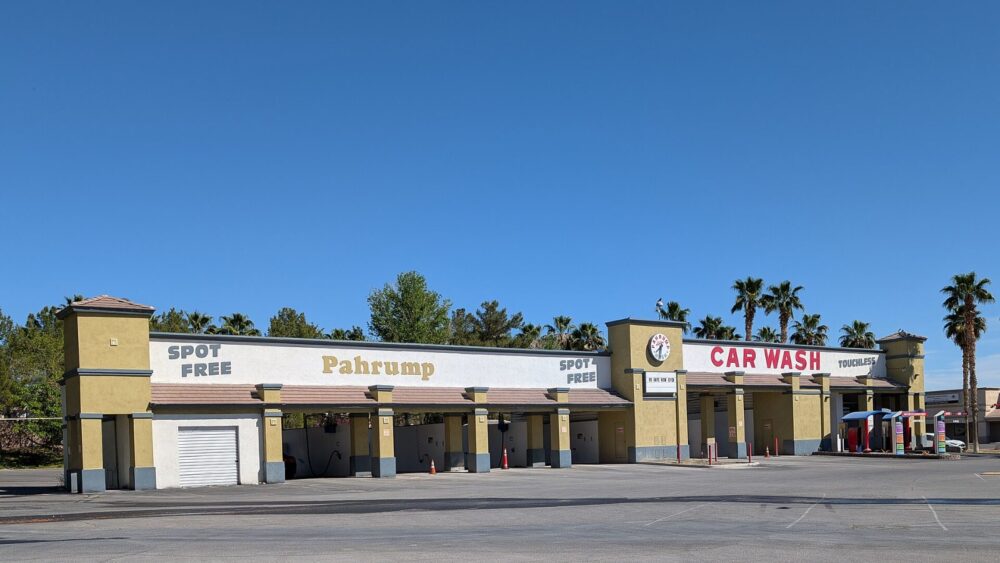
A 360 car wash is a touchless automatic system in which a single overhead arm travels in a full circle around a parked car, spraying pre-soak, detergent, high-pressure water and rinse from every angle. Nothing but liquid touches the paint, which makes it a popular option for owners worried about brush marks, though it cleans less thoroughly than a careful hand wash.
In this guide
How the machine moves
Most 360 systems are installed in a single bay. You drive in, stop at a marked line or when a signal light tells you to, and switch off. A gantry or boom mounted on the ceiling then rotates around the car on a track, keeping the spray nozzles at a set distance from the bodywork. Sensors measure the car’s length and adjust the path so the nozzles do not hit mirrors or bumpers.
The cycle typically has these stages, though manufacturers and operators set their own programmes:
- Pre-soak: an alkaline or low-pH chemical that loosens dirt.
- Foam or detergent pass: dwell time lets the chemistry work.
- High-pressure rinse: the arm makes one or more passes at higher pressure.
- Protectant or spot-free rinse: often filtered or reverse-osmosis water to reduce spotting.
- Drying: blowers mounted on the arm or at the bay exit.
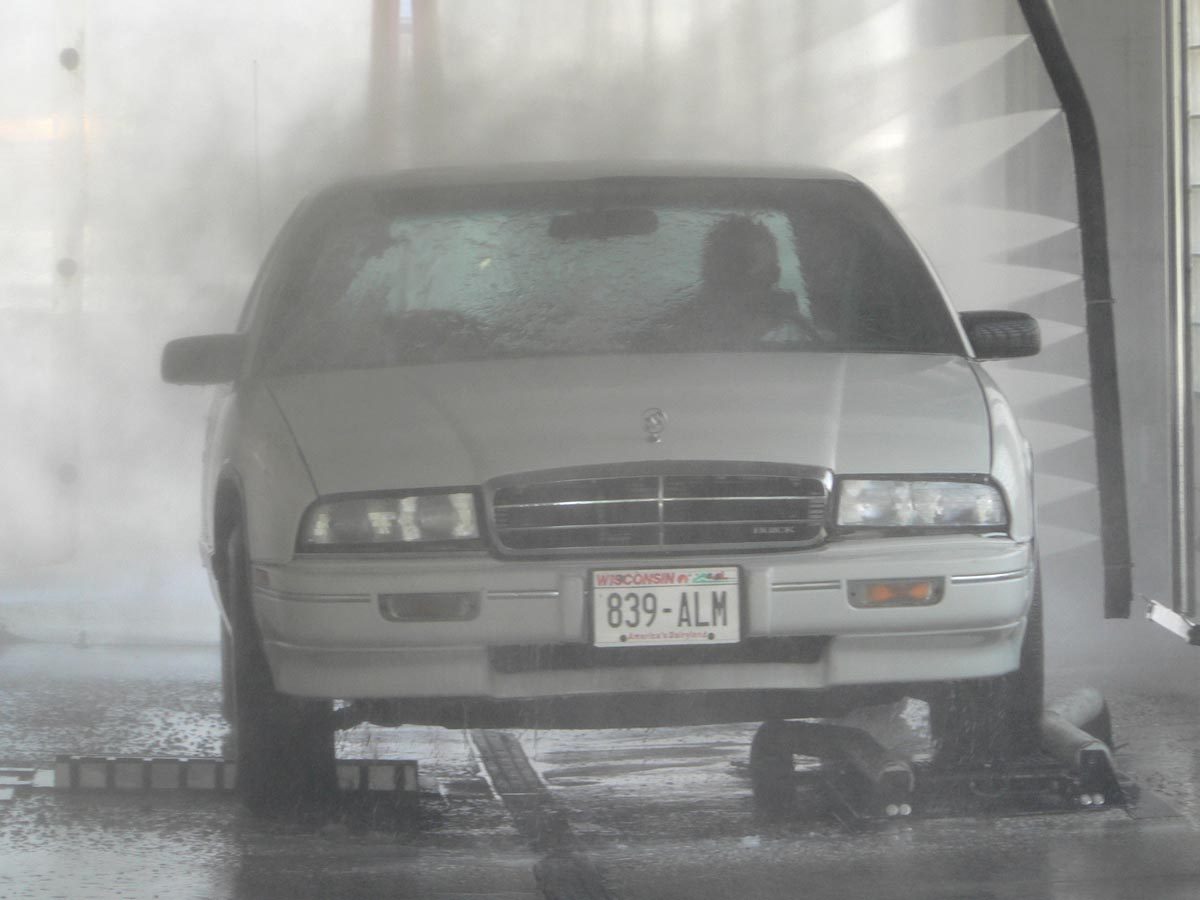
Why owners choose a 360 touchless wash
The main reason is paint safety. Without brushes there is nothing to drag grit across the clear coat. That makes touchless systems attractive for:
- Dark-coloured cars, where swirls are most visible
- Vehicles with ceramic coatings, where installers often prefer contact-free washing
- Wrapped cars and cars with paint protection film, provided the operator’s pressure settings suit them
- Cars with roof racks or wide mirrors that do not suit tunnel brushes
Where it falls short
Pressure and chemistry can only do so much. A thin layer of traffic film, sometimes called road film, bonds to paint and usually needs gentle agitation to remove completely. After a touchless wash you may see a dull haze on the lower doors, rear hatch and front bumper, which are the areas most exposed to exhaust, tyre spray and bugs.
| Factor | 360 touchless | Brush tunnel | Hand wash |
|---|---|---|---|
| Risk of wash-induced swirls | Low | Low to moderate | Depends on technique |
| Removal of bonded film | Partial | Good | Good |
| Chemical strength | Often stronger | Moderate | You choose |
| Time | About 5 to 12 min | About 5 to 10 min | 30 min or more |
| Good for coated or wrapped cars | Usually | Check with installer | Yes, with care |
For a broader comparison including mobile and waterless options, see the car wash methods comparison.
About stronger chemicals
Because touchless washes rely on chemistry instead of friction, some use stronger pre-soaks. Reputable operators balance and rinse these properly. If you have a coating, ask the installer which wash products are compatible, and keep an eye on how the car beads water over time.
Getting the best result in UAE conditions
Heat changes everything. On a summer afternoon a car body can be far hotter than the air, and water or chemicals can dry on the surface before the next stage reaches them. A few habits help:
- Wash early in the morning or in the evening, or let the car cool in shade first.
- After a dust storm, consider two cycles or a manual pre-rinse; heavy sand layers may not lift fully in one pass.
- Choose the spot-free rinse option if available, especially if you will not towel dry.
- Carry a clean, plush microfibre towel to blot mirrors, door handles and the boot edge.
Things to check before driving in
Before the cycle starts
- Close windows and sunroof fully.
- Retract or remove screw-on antennas and loose accessories.
- Fold mirrors if the bay signage asks you to.
- Make sure rear wipers are parked and bike racks are removed.
- Follow the bay’s signals on where to stop; stopping too far forward can affect sensor readings.
Maintenance routine that pairs well with touchless
A 360 wash is a strong weekly tool, but it works best in a routine. Every few weeks, do a careful hand wash with a pH-neutral shampoo, a clean mitt and two buckets to remove the remaining road film. A few times a year, use iron remover and a clay or synthetic clay mitt to clear contamination. Then refresh protection. Use the site’s detailing checklist to plan the steps in the right order.
Frequently asked questions
Is a 360 car wash completely touch-free?
The machine itself is. Staff at some sites may hand-dry the car afterwards with towels, which is contact, so check the menu if you want to avoid it.
Can a touchless wash damage paint?
It is very unlikely to cause swirls. Very high pressure aimed at damaged paint, loose trim or peeling clear coat can make existing problems worse.
Will it clean my wheels properly?
It removes loose dust. Baked-on brake dust often needs a dedicated wheel cleaner and a brush.
Is it suitable for a wrapped car?
Many wrap manufacturers recommend touchless or hand washing. Check the wrap installer’s care guide for pressure and distance limits.
Sources: International Carwash Association, Dubai Municipality, 3M Automotive
Cover photo: G. Edward Johnson, CC BY 4.0. Last reviewed: 2026-11-25.